Our Animals
High Standards
Cage free
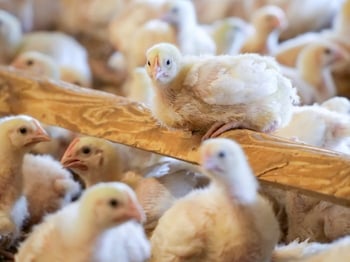
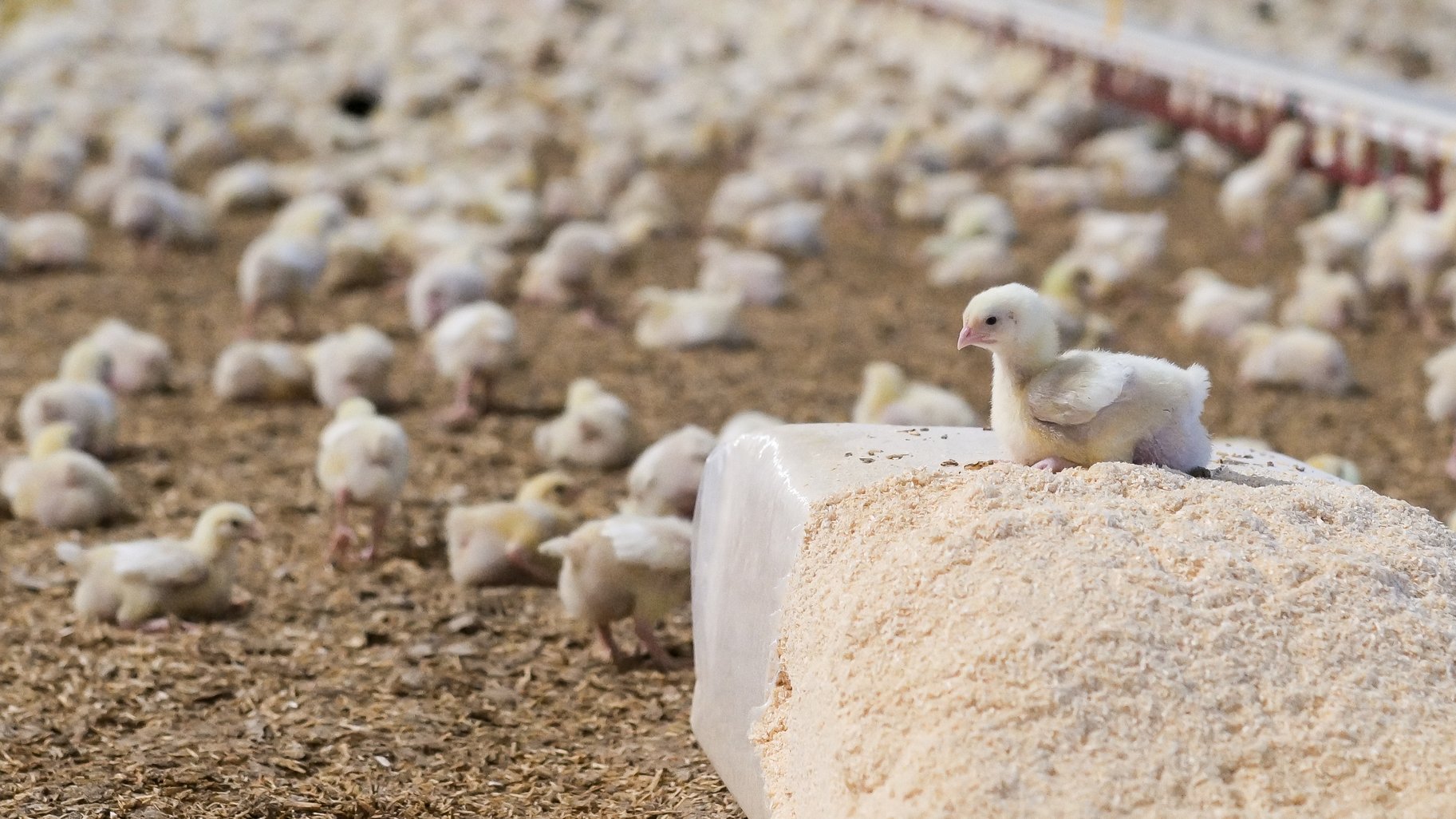
We do not use cages. All of our chickens and turkeys are reared in large, airy barns and have the ability to roam freely and flap their wings.
Housing
All of our birds live in large barns where they are free to move around and flap their wings. Keeping birds inside allows us to create a safe and comfortable environment whilst maintaining the highest levels of biosecurity. In this environment, birds are also shielded from diseases (e.g. Avian Influenza) and wild predators.
Hormones free
We never use growth hormones. In fact, growth hormones aren’t used at all in the UK poultry industry and have been illegal since the early 1980’s. Our birds’ growth is natural, based on their diet, their environment and their breed.
Diet
Our birds’ feed is natural, most of it is vegetarian and we mill it ourselves in one of our mills, or another accredited site. We tailor the feed to the species and their age, to make sure they get exactly what they need, but the basic ingredients are wheat, soya, oil seed rape, vitamins and minerals. Organic and Bronze turkeys are also fed fish meal as an additional source of protein.
Baldness
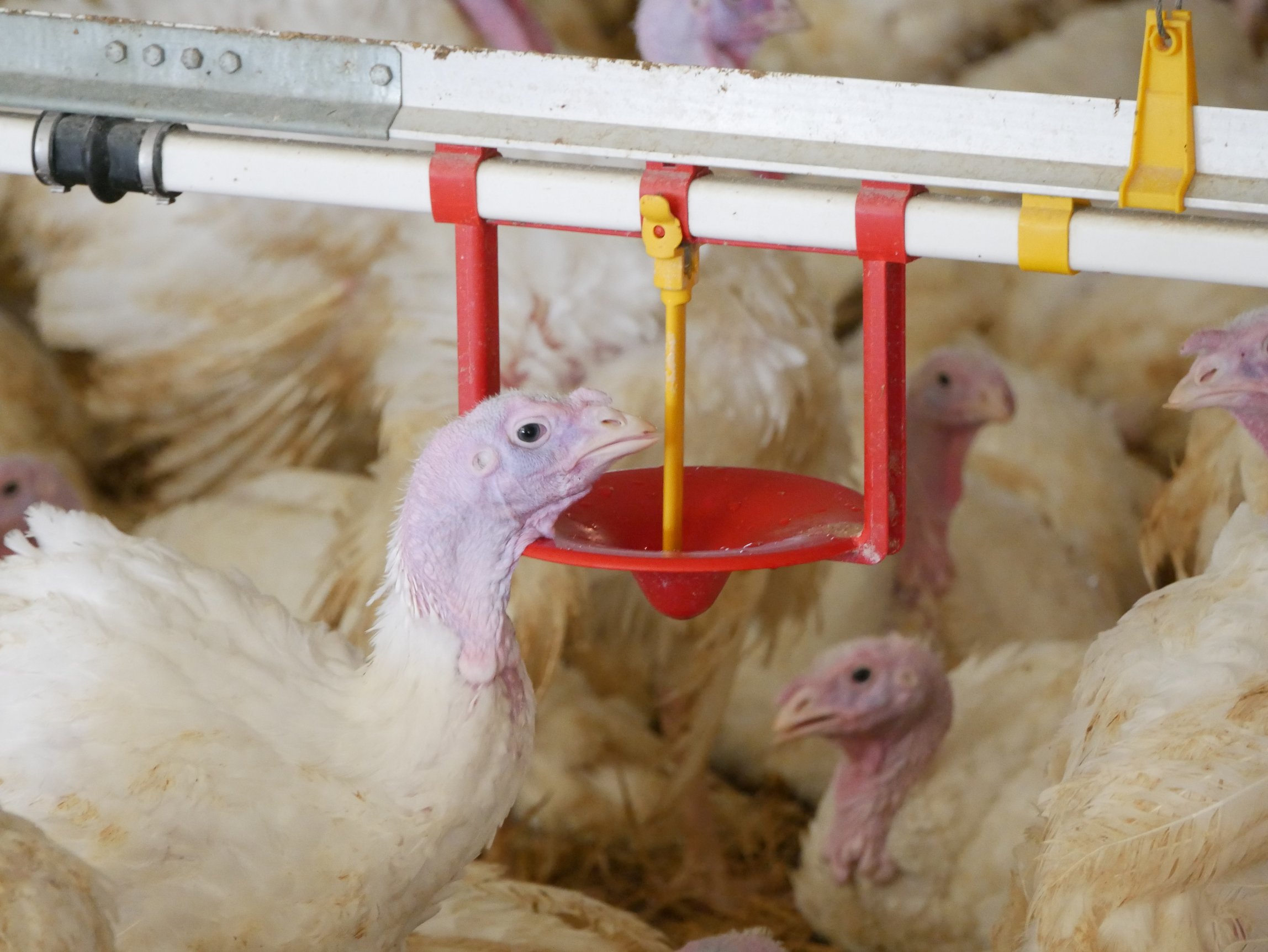
Like many birds, chickens and turkeys all shed their down feathers, which are replaced by adult feathers. This is a perfectly natural process but means that, during the transition, bald areas are common. Our birds would rather peck at the drinkers, feeders, or other pecking objects than each other.
Antibiotic use
We never use antibiotics routinely and only if a bacterial disease has been identified by a vet. We work hard to keep our birds healthy and avoid the need for medication, but if a bird is sick we would much rather help it get better than let it suffer.
No Antibiotics in meat
Antibiotic residue does not find its way into the food chain. Any animal that is treated with antibiotics is observed for a specific amount of time after the course has been completed to ensure that the antibiotics are not in the meat.
As a checking measure, we also test samples of meat each month to prove that they do not contain antibiotics.
Beak trimming
We know that some types of poultry have the potential to be a bit feisty. To prevent them from harming the other birds around them we use an infra-red beak treatment to trim their beak at an early age. It’s permitted by the RSPCA and we’re happy that it’s the best way to do it.
No Genetic modification
None of our birds are cloned or subject to genetic engineering. Modern poultry breeds have been developed through a process of natural selection alone.
Stunning
All of our birds are pre-stunned and unconscious before slaughter. There are no exceptions.